Worktop material guide

Stainless Steel vs Laminate vs Quartz: Which Worktop Material Is Right for You?

Not sure which worktop to choose? Here is a simple, honest comparison of stainless steel, laminate and quartz – cost, durability, hygiene, maintenance and how each material feels to live with.

Configure stainless worktop

See your price in about a minute – made-to-measure stainless with sink and hob cut-outs included.
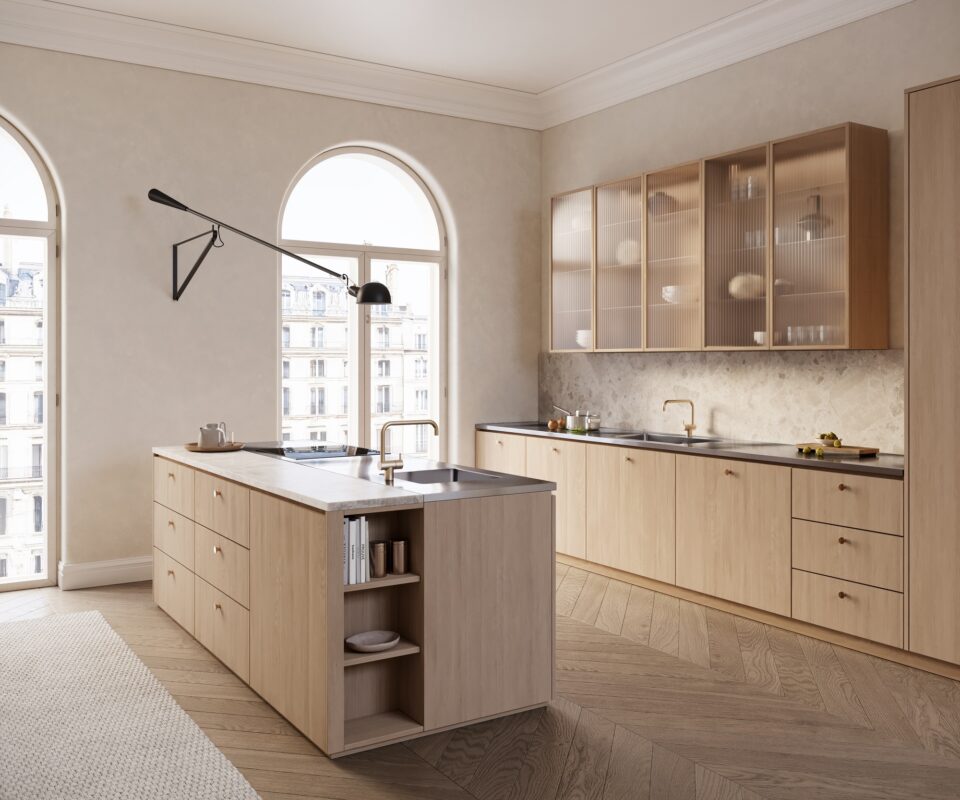
Picture from Stala
Your worktop is one of the most used surfaces in your home. It has to look good, handle heat and spills, and stay practical for years. Below we compare three popular choices: stainless steel, laminate and quartz.

We will be clear where stainless steel is better and where it is worse. That way you can decide if it is the right material for your kitchen.

Quick Comparison: Cost, Durability, Hygiene and Maintenance

Stainless steel, laminate and quartz compared side by side.
Material Cost (relative) Durability & lifespan Hygiene & stain resistance Maintenance Look & feel
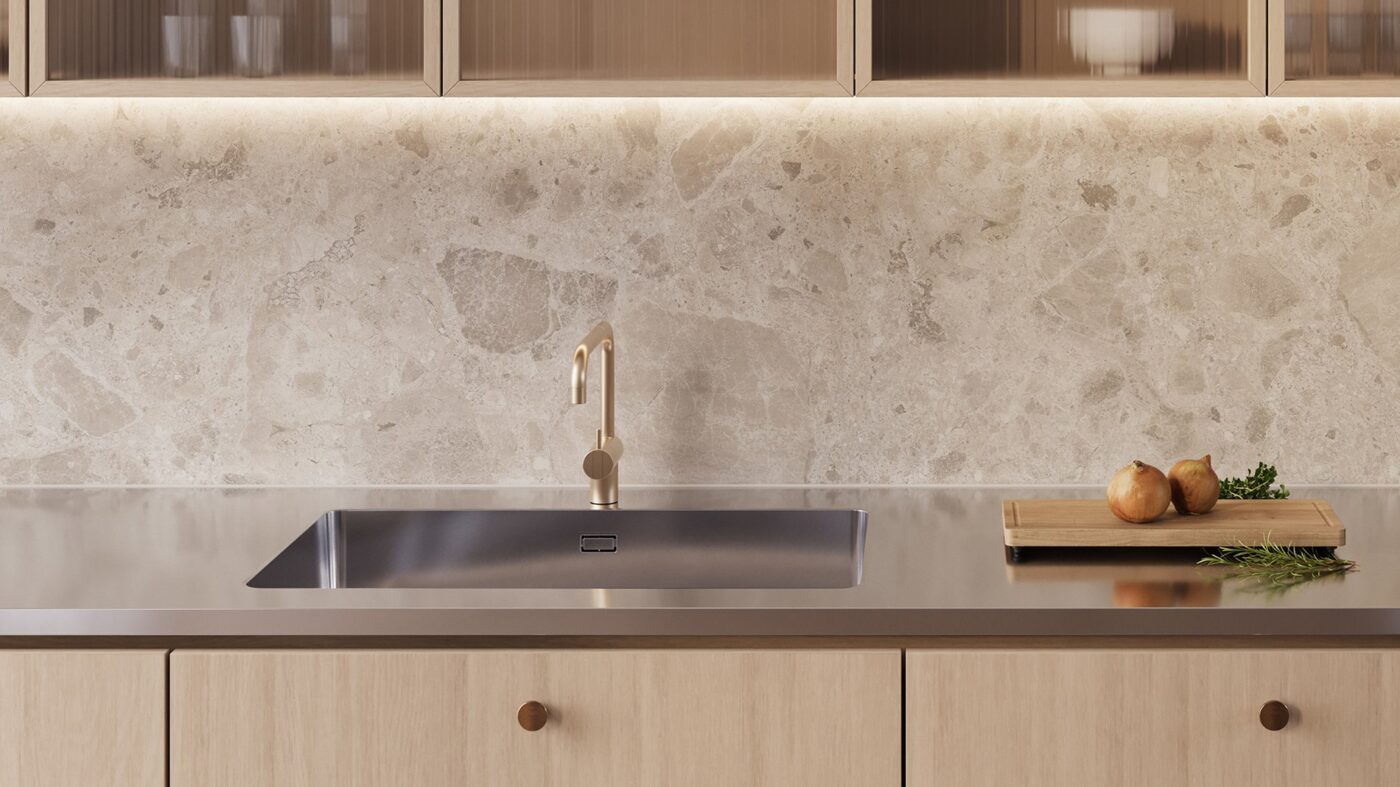
Stainless steel €€–€€€ (custom-made) Very durable; can last decades. Surface develops a patina of fine scratches. Non-porous and highly hygienic. Easy to keep clean. Simple daily wipe. No sealing. Scratches are normal and cannot be fully removed. Professional, modern, slightly industrial. Can be noisy and shows scratches and fingerprints.
Laminate € (budget-friendly) OK durability. Typically 10–20 years with normal use. Surface is fairly stain-resistant, but the core can swell if water gets into joints. Low effort, but must be protected from hot pans and direct cutting. Very wide range of colours and patterns. Can mimic stone or wood but feels lighter and less “solid”.
Quartz €€€ (premium) Hard-wearing with long lifespan and good scratch resistance. Non-porous and very stain-resistant when wiped reasonably quickly. Simple day-to-day care. No sealing, but trivets are recommended for high heat. Stone-like, polished and quiet. Consistent patterns and colours.

Stainless steel – hygienic, precise and built for daily use.

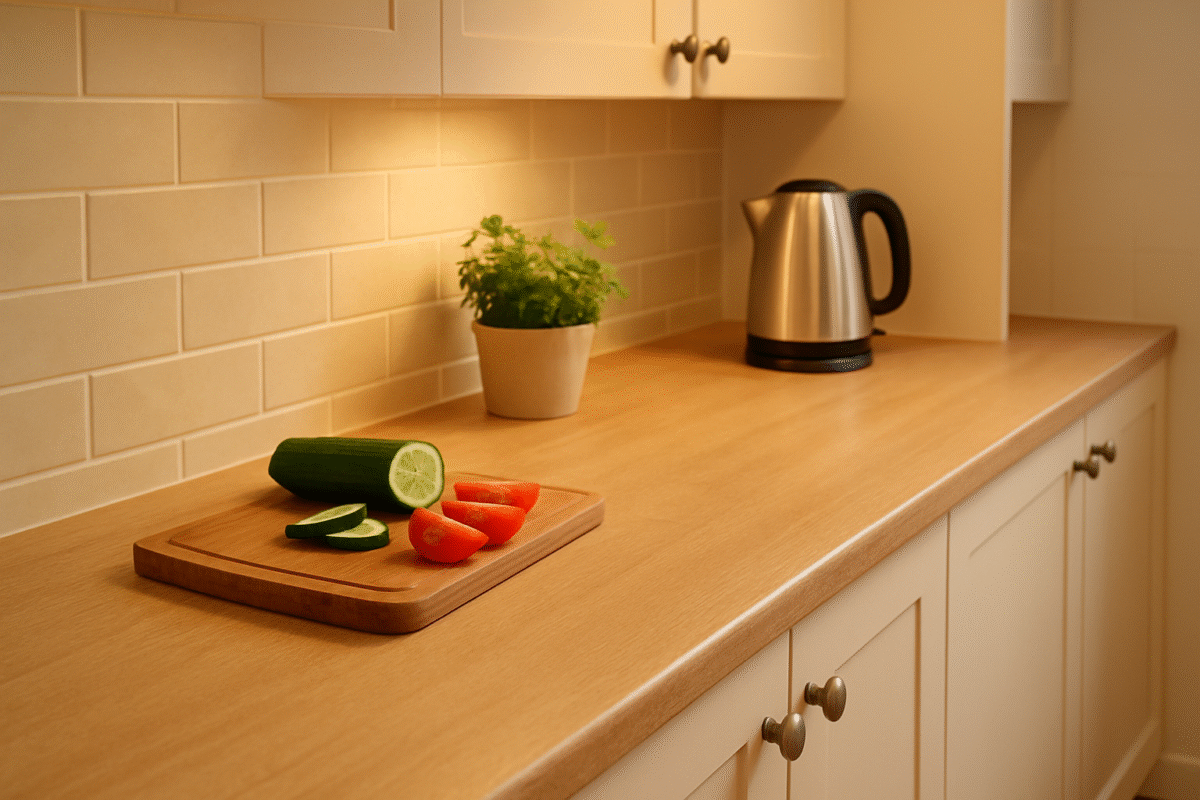
Laminate – budget-friendly with many patterns and colours.

Quartz – premium stone-like look with low daily maintenance.

Stainless Steel Worktops: Built for Real Cooking

Stainless steel is the default choice in professional kitchens for a reason: it is hygienic, robust and precise.

Where stainless steel is strong

  • Hygiene – Non-porous surface that does not absorb liquids or food juices.
  • Heat and spill resistance – Normal pans, splashes and spills are not a problem.
  • Precision – Sink, hob and tap cut-outs can be CNC-cut to the millimetre.
  • Longevity – The surface will age visually but continue to perform for many years.

Where stainless steel is worse (honestly)

  • Scratches are visible – Fine scratches appear from daily use and build into a patina. This is normal, not a defect.
  • Noise – Metal is louder than stone or laminate. Good support helps, but it will never be “silent”.
  • Fingerprints and smears – Especially on smooth finishes. Patterned finishes help but do not remove this completely.
  • Cool, professional look – Some people love it; others feel it is too “industrial” for their home.

How the worktop is built

The worktops are designed for everyday kitchens, not only restaurants. Each worktop typically includes:

  • 0.7 mm stainless steel as the top layer (Smooth or StalaTex pattern).
  • A stable MDF core for flatness and vibration damping.
  • A supporting plywood frame for stiffness and secure mounting.
  • Custom thickness options (20 / 30 / 40 mm overall).